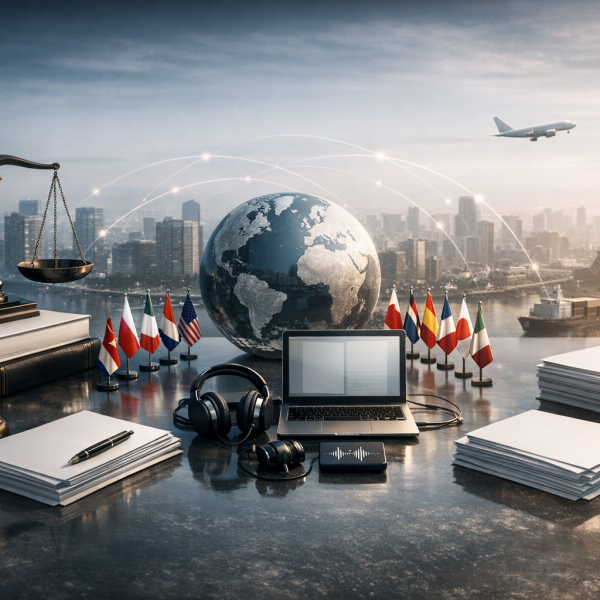
Document translation is one of the most powerful tools global companies use to unlock new markets, build trust with international partners, and stay competitive. From legal contracts and user manuals to marketing brochures and in-game text, accurate and efficient translation keeps information flowing seamlessly across borders and languages.
1. Understanding the Scope of Business Document Translation
For global businesses, document translation goes far beyond swapping words from one language to another. It includes understanding industry-specific terminology, legal requirements, and the expectations of local audiences. Common types of documents that require professional translation include contracts, financial statements, HR policies, technical manuals, software interfaces, training materials, and marketing collateral.
Each category brings its own challenges. Legal and financial documents must be translated with absolute precision to avoid compliance issues. Marketing and sales documents must be culturally aligned to drive engagement and conversions. Technical and product-related files must be clear to prevent user errors and reduce support costs.
2. Initial Needs Assessment and Project Scoping
The process usually begins with a needs assessment. A translation provider consults with the business to identify the target languages, document types, volume, deadlines, and any regulatory or branding constraints. This step determines whether the project calls for basic translation, transcreation, localization, or a combination of these approaches.
For example, a company entering a new market with software or digital entertainment content might require specialized services such as Turkish game localization services, which involve adapting in-game text, interface elements, and cultural references to meet audience expectations in Turkey.
A needs assessment also reveals how much of the workload is market entry itself. Registering a company, opening bank accounts, and signing a first lease all generate documents that local authorities must accept without question. For that reason, firms moving into Thailand often choose business translation services that understand both the paperwork and the local business culture. Getting those foundations right early prevents expensive corrections once operations begin.
3. Document Preparation and Content Analysis
Before translation starts, files are analyzed and prepared. The provider checks document formats, extracts translatable text from PDFs, images, or design files, and identifies repeated phrases and terminology. This is also when sensitive information is flagged for extra security, and any illegible or low-quality scans are discussed with the client.
At this stage, translation teams often use content analysis tools to estimate word counts, detect possible layout challenges, and assess language complexity. This helps in planning the workflow, assigning the right experts, and providing accurate costs and timelines.
4. Building Glossaries and Style Guides
Consistency is critical for global brands. To ensure that product names, legal terms, and technical jargon are rendered the same way across thousands of pages, translation providers develop glossaries and style guides. These resources define preferred terminology, tone of voice, formatting conventions, and rules for handling dates, currencies, measurement units, and acronyms.
A well-prepared style guide streamlines future projects and makes it easier to maintain a unified brand identity in every target language, whether the documents are legal disclosures, marketing campaigns, or internal training materials.
5. Selecting Native-Speaker, Subject-Matter Experts
Professional services rely on native speakers who also understand the relevant industry. A translator with legal training will handle contracts, while a specialist in engineering or IT will work on technical documentation. This combination of language mastery and subject expertise reduces misunderstandings and ensures that specialized terms are used correctly.
For large projects, several translators may collaborate under the guidance of a lead linguist or project manager who oversees quality, maintains coherence, and resolves terminology questions.
6. Using Translation Memory and CAT Tools
Modern document translation is heavily supported by technology. Computer-assisted translation tools and translation memory databases store previously translated segments, which are reused when identical or similar content appears again. This increases consistency and reduces turnaround time and costs, especially for companies that update manuals, policies, or product documentation regularly.
Glossaries and style guides are integrated into these tools so translators can access approved terms and receive automatic suggestions, further improving accuracy and brand alignment.
7. The Core Translation Process
During the main translation phase, linguists work through the content segment by segment, ensuring that meaning, tone, and intent are preserved. They adapt phrases to be natural in the target language, taking into account cultural norms, reading habits, and context. For marketing and customer-facing documents, the text may be creatively reworked so that it resonates with local audiences while still reflecting the company’s original message.
Translators also pay attention to legal and compliance aspects, especially when dealing with regulatory documents, disclosures, or health and safety information, where inaccurate wording could have serious consequences.
Global businesses mostly need documents moved between languages without losing their legal or contractual shape. Research publishing has a stricter version of the same requirement, because a paper carries method, measurement and citation all at once. What document translation services do for scientific papers is closer to editing than to conversion, and the difference shows up at peer review.
8. Editing, Proofreading, and Quality Assurance
Once the initial translation is complete, it undergoes rigorous editing and proofreading by separate linguists. Editors check for clarity, accuracy, grammar, and adherence to the style guide. Proofreaders focus on catching remaining errors, formatting inconsistencies, and punctuation issues.
Many providers use multi-step quality assurance workflows that include automated checks for missing numbers, inconsistent terms, or truncated sentences. This layered approach helps ensure that every translated document is polished and error-free before delivery.
9. Localization of Layout, Design, and Formats
Global businesses often need translated documents in specific visual formats, including brochures, product labels, training decks, or software interfaces. After the text is finalized, desktop publishing specialists or localization engineers reinsert the translations into the original layouts and adjust design elements to accommodate text expansion, different scripts, and reading directions.
This may involve reflowing text in graphics, adapting icons and images, or reconfiguring forms. The end goal is that the localized document looks and functions as naturally in the target language as the original did in its source language.
10. Confidentiality, Security, and Compliance
Businesses frequently translate sensitive information, such as financial reports, intellectual property documentation, or strategic plans. Reputable providers use secure file transfer methods, confidentiality agreements, and controlled access systems to protect client data. Some projects may also need to meet specific regulatory standards related to data protection, such as industry-specific privacy rules or regional compliance frameworks.
Security practices are integrated into every stage, from file handling and storage to translator onboarding and long-term archiving or deletion policies.
11. Delivery, Feedback, and Ongoing Optimization
After quality checks and layout adjustments, the final documents are delivered in the required formats and languages. However, the workflow does not end there. Global businesses often provide feedback based on internal reviews or market responses, which is then fed back into glossaries, style guides, and translation memories.
Over time, this ongoing optimization makes translations more aligned with brand voice, more efficient to produce, and better adapted to specific markets. The result is a smoother communication pipeline that supports long-term international growth.
Conclusion
Professional document translation services give global businesses a structured, technology-driven, and quality-focused way to communicate across languages. Through careful planning, expert linguists, advanced tools, and strict quality assurance, companies can consistently produce accurate, culturally relevant documents that support operations, compliance, and marketing in every target region. For organizations aiming to expand internationally and maintain a strong, unified brand, a reliable translation partner is not just helpful; it is essential.